We use cookies to make your experience better. To comply with the new e-Privacy directive, we need to ask for your consent to set the cookies. Learn more.

Petrol vs Hybrid – What’s the difference?
08 May 2026
When buying a new car, petrol and diesel engines have traditionally been the default choice. However, the automotive industry is changing rapidly. In the UK, all new cars sold will need to be zero‑emission capable by 2035, making electrification an unavoidable part of the future.
For many drivers, a hybrid or plug‑in hybrid (PHEV) is the ideal stepping stone. Hybrids combine a traditional petrol engine with an electric motor, offering many of the benefits of electric driving without the range concerns of a fully electric vehicle. But how does owning a hybrid really compare to a petrol car?
Here are some key factors to consider.
Running Costs & Economy
Hybrid vehicles can offer significant savings, particularly in everyday driving.
Plug‑in hybrids allow you to complete shorter journeys using electric power alone. If you regularly commute, run errands, or do school drop‑offs within the vehicle’s electric range, you could dramatically reduce your fuel bills. Charging at home is often far cheaper than refuelling with petrol, especially on off‑peak electricity tariffs.
Hybrids are also designed to be efficient. The electric motor supports the petrol engine during acceleration and in stop‑start traffic, where petrol cars are least economical.
That said, for drivers who frequently cover long motorway distances, a petrol engine may still be simpler. Once a plug‑in hybrid’s battery is depleted, the vehicle relies more heavily on its petrol engine. Because hybrids carry larger batteries and electric components, they are heavier, which can reduce efficiency during long journeys.
Tax Benefits
Hybrids can be particularly attractive from a tax perspective:
Company car drivers benefit from significantly lower Benefit‑in‑Kind (BiK) rates on plug‑in hybrids compared with petrol vehicles.
Private owners also enjoy reduced road tax (VED), as hybrid road tax is based on lower CO₂ emissions and the vehicle’s registration date.
Overall, if most of your journeys are short and you can charge regularly, a plug‑in hybrid can be far cheaper to run than a petrol car.
Environmental Impact
One of the biggest differences between petrol and hybrid vehicles is their impact on the environment.
Petrol cars emit carbon dioxide and other greenhouse gases every time you drive, contributing to climate change and air pollution.
A plug‑in hybrid gives you far more control over your emissions:
- Short, local journeys can be completed using electric power only, producing zero tailpipe emissions.
- Longer journeys benefit from reduced emissions thanks to the electric motor assisting the petrol engine.
Hybrids also make smarter use of energy. Features such as regenerative braking capture energy normally lost during braking and redirect it back into the battery, improving overall efficiency and reducing waste.
Driving Performance & Comfort
Hybrids drive differently from traditional petrol cars, but not necessarily worse.
While hybrid systems are heavier than standard combustion engines, this is balanced by the instant torque provided by the electric motor. Many hybrids feel:
- Smooth and responsive during acceleration
- Effortless when climbing hills
- Well‑suited to urban and stop‑start driving
Manufacturers often pair hybrid systems with smaller petrol engines, relying on electric assistance to maintain strong performance while reducing fuel consumption.
Noise is another noticeable difference. Hybrid vehicles are exceptionally quiet at low speeds, especially in electric mode. If you enjoy peaceful drives and refined comfort, this is a major advantage. However, if engine sound is an important part of your driving enjoyment, a petrol car may still feel more engaging to you.
Design & Practicality
Visually, there is little difference between petrol and hybrid Mercedes‑Benz models.
Both offer the same:
- Elegant styling
- Premium interiors
- Advanced technology and safety features
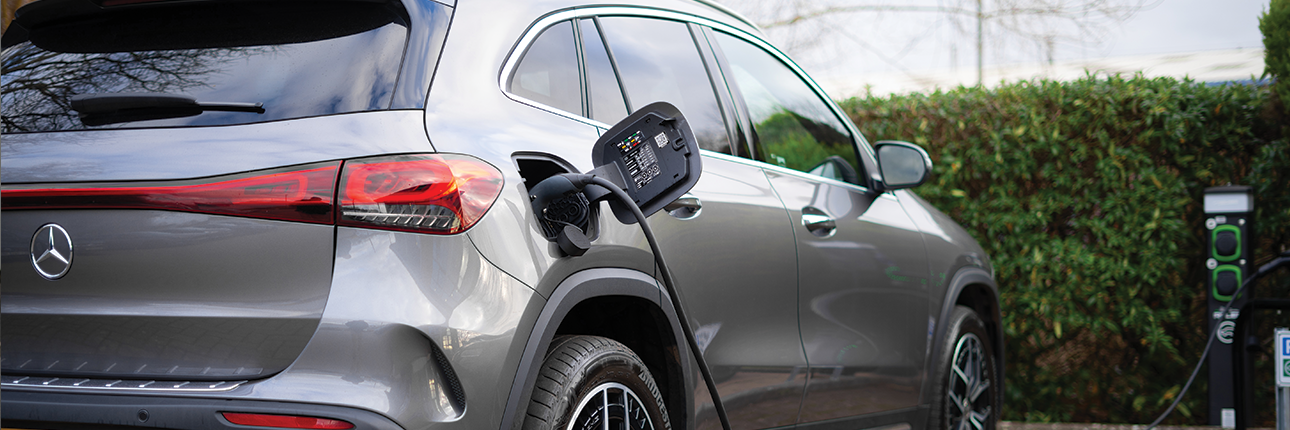
Hybrid models may include subtle additions such as charging ports or energy‑use displays, but overall, they look and feel just as luxurious as their petrol counterparts. Choosing a hybrid does not mean compromising on design or comfort.
Which Is Right for You?
Choose petrol if you frequently drive long distances, don’t have easy access to charging, or prefer the traditional feel and sound of a combustion engine.
Choose a hybrid if most of your journeys are short to medium distance, you can charge at home or work, and you want lower running costs, reduced emissions, and potential tax savings.
Watch our hybrid overview video:
https://www.youtube.com/watch?v=nA_ZNh8mG-M