We use cookies to make your experience better. To comply with the new e-Privacy directive, we need to ask for your consent to set the cookies. Learn more.


Electric Car FAQs
04 Nov 2026
Electric vehicles (EVs) have become an increasingly common sight on roads across the South West. As charging infrastructure continues to expand and battery technology improves, more drivers are considering making the switch to electric.
At Mercedes-Benz South West, we're frequently asked questions about charging, range, battery life and everyday EV ownership. To help, we've compiled answers to some of the most common electric car FAQs.
Whether you're considering your first EV or comparing models, this guide will help you understand what electric motoring looks like in 2026.
What is an electric vehicle (EV)?
An electric vehicle is powered either entirely or partially by electricity rather than a conventional petrol or diesel engine.
There are several types of electrified vehicles:
- Battery Electric Vehicles (BEVs) – powered solely by electricity
- Plug-in Hybrid Electric Vehicles (PHEVs) – combine an electric motor with a petrol engine
- Hybrid Electric Vehicles (HEVs) – use a battery and petrol engine together, with no need to plug in
The latest all-electric Mercedes-Benz models deliver impressive performance, instant torque and zero tailpipe emissions while driving.
How far can an electric car travel on a full charge?
Range remains one of the most common questions for first-time EV buyers.
Modern electric vehicles offer significantly more range than many people expect. Depending on the model, current Mercedes-Benz electric vehicles can offer well over 250 miles of range, while flagship models can exceed 400 miles under the right conditions.
Real-world range depends on:
- Driving style
- Weather conditions
- Vehicle load
- Terrain
- Use of heating and air conditioning
For most UK drivers, who travel fewer than 25 miles per day on average, an EV's range is more than sufficient for everyday commuting, school runs and weekend trips.
How long does it take to charge an electric car?
Charging time varies depending on the charger used and the size of the battery.
Home Charging
Most EV owners charge overnight using a home wallbox, allowing the vehicle to be ready each morning.
Public AC Charging
Commonly found in car parks, retail parks and workplaces.
Rapid and Ultra-Rapid DC Charging
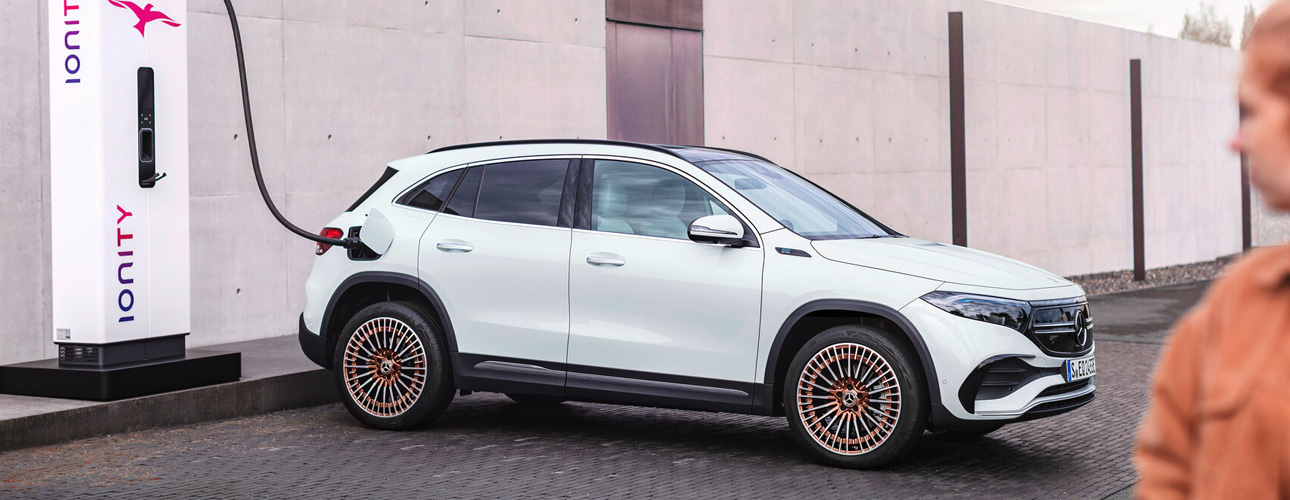
Available at service stations and major road networks, rapid charging can add substantial range in as little as 20-40 minutes depending on the vehicle and charging speed.
Can I charge an electric car at home?
Yes. In fact, most charging takes place at home.
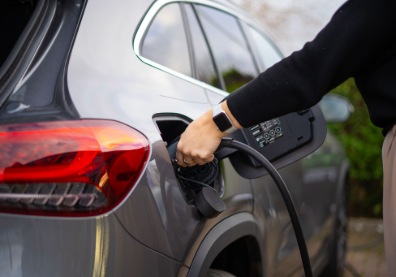
A dedicated home charger offers the fastest and most convenient option. Many drivers simply plug in overnight and begin each day with a full battery.
For households across the South West, home charging can also be one of the most cost-effective ways to run a vehicle, particularly when using off-peak electricity tariffs.
Where can I find public charging stations?
The UK's public charging network continues to grow rapidly, making longer journeys easier than ever.
You'll find charging points at:
- Motorway service stations
- Supermarkets
- Shopping centres
- Hotels
- Tourist attractions
- Town and city centre car parks
Many EV drivers use smartphone apps to locate chargers, check availability and plan routes around charging stops.
Are electric cars cheaper to run?
In many cases, yes.
Electric vehicles typically benefit from:
- Lower energy costs compared to petrol or diesel
- Fewer moving parts
- Reduced servicing requirements
- No oil changes
- Less wear on brakes thanks to regenerative braking
While purchase prices can vary, many drivers find the ongoing running costs help offset the initial investment over time.
Do electric cars need servicing?
Yes, but servicing requirements are usually simpler than traditional petrol or diesel vehicles.
Electric vehicles still require inspections of components such as:
- Tyres
- Brakes
- Suspension
- Cabin filters
- Battery systems
- Cooling systems
Because EVs have fewer mechanical components, maintenance schedules are often less complex than those of internal combustion engine vehicles.
How long do EV batteries last?
Battery longevity is one of the biggest concerns for prospective EV buyers.
Modern EV batteries are designed to last for many years and hundreds of thousands of miles when properly maintained. Many manufacturers provide dedicated battery warranties for additional peace of mind.
Battery management systems help protect battery health by controlling charging and temperature conditions, ensuring long-term performance.
Does cold weather affect electric vehicle range?
Yes, colder temperatures can temporarily reduce driving range.
This happens because batteries operate less efficiently in lower temperatures, while heating the cabin requires additional energy.
However, there are several ways to maximise winter range:
- Pre-condition the vehicle while plugged in
- Keep tyres correctly inflated
- Use seat and steering wheel heating where possible
- Plan charging stops for longer journeys
- Drive smoothly and efficiently
Many modern Mercedes-Benz electric vehicles include intelligent energy management systems designed to optimise efficiency throughout the year.
Can electric cars be used for long journeys?
Absolutely.
With improving battery technology and expanding charging infrastructure, EVs are increasingly suited to longer-distance travel.
Many electric vehicle navigation systems can automatically plan routes around charging locations and calculate charging stops based on your remaining battery level.
For drivers travelling throughout the South West, across the UK or beyond, long-distance EV travel has become far more convenient than ever before.
Are electric cars environmentally friendly?
Electric vehicles produce zero tailpipe emissions while driving, helping to improve local air quality.
When combined with renewable energy sources, EVs can significantly reduce a driver's overall carbon footprint compared with traditional petrol and diesel vehicles.
As the UK electricity grid continues to increase its use of renewable energy, the environmental benefits of EV ownership are expected to grow further.
Is now a good time to switch to electric?
With longer ranges, faster charging, lower running costs and an expanding charging network, there has never been a better time to explore electric driving.
Whether you're looking for a practical family SUV, a premium saloon or a high-performance electric vehicle, the latest Mercedes-Benz electric models offer technology, comfort and efficiency without compromise.
Explore electric vehicles at Mercedes-Benzes South West
If you're considering making the move to electric, our team at Mercedes-Benz South West can help you find the right vehicle for your lifestyle and driving needs.