We use cookies to make your experience better. To comply with the new e-Privacy directive, we need to ask for your consent to set the cookies. Learn more.

Van Conversions for UK Staycations
12 Aug 2026
With more and more of us choosing to holiday closer to home, the staycation trend continues to reshape the UK travel landscape. For travellers looking to combine freedom, comfort and adventure, van conversions have become an increasingly popular way to experience everything the South West has to offer, from sunrise surf sessions in Cornwall to scenic road trips through Devon and Dorset. As the appeal of flexible, self-guided travel grows, a converted van is quickly becoming the ultimate staycation companion.
Here's how you experience your own little piece of van life.
UK campervan and van conversion demand remains strong
The UK's appetite for campervan travel shows little sign of slowing. While the explosive growth seen during the pandemic has moderated, domestic tourism continues to support a thriving van conversion market. In 2025, UK residents took more than 87 million overnight trips within Great Britain, spending almost £29 billion on domestic travel.
Campervans and converted vans remain an attractive option for holidaymakers looking to explore the UK's coastline, national parks and rural destinations at their own pace. The DVLA continues to provide guidance for owners converting vehicles into motor caravans, reflecting the ongoing popularity of van conversions across the UK.
Campervan conversion tips
1. Set your budget
If you're starting from scratch, the first step is to set a realistic budget and find the right base vehicle. One of the biggest advantages of a van conversion is that it can be significantly more affordable than buying a factory-built campervan, while giving you the flexibility to create a layout that suits your style of travel. However, costs can vary considerably depending on the specification.
A simple conversion with basic sleeping, storage and cooking facilities may start from around £5,000, while a fully equipped camper with insulation, electrics, solar power, heating and a bespoke interior can easily exceed £15,000, on top of the vehicle purchase price. Setting a clear budget from the outset will help you balance features, comfort and practicality when choosing the right van for your staycation adventures.
2. Think about space
The main consideration is how many people will be travelling in the van and how long you'll be away for at a time. Every travelling passenger must have a suitable seat fitted with an approved seat belt that complies with UK regulations. While side-facing travel seats can be fitted in some conversions, forward-facing seats are generally considered the safest option and are typically preferred for passenger travel.
You should also think about whether you’ll want to drive the van when you’re camping in it. If you will, then a smaller day van might be a better fit. A popular choice for those looking for a good-sized campervan is the Mercedes-Benz Sprinter. It has the power to carry the weight added by the new features as well as high roof and long-wheelbase models that are perfect for conversions. Despite being quite a large van, the Sprinter is also relatively narrow. That makes it more manoeuvrable and easier to drive, particularly when navigating down country lanes.
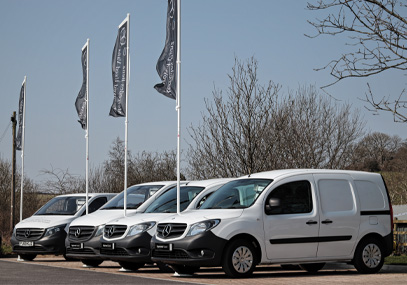
The Mercedes-Benz Vito is another ideal choice for a camper conversion. Its smaller size makes it a more practical everyday vehicle that offers a car-like driving experience. It also has driver and passenger airbags as standard on all models and the option of Lane Keeping Assist, which is a great feature on longer journeys. Take a look at our range of Mercedes-Benz vans.
3. Decide on the features
One of the best things about creating your own campervan is that you can choose exactly what goes in it. A bed, something to cook on, a table and some seating should be considered essential. But from that point on, it’s completely up to you. A shower and a toilet are a good idea if you want to embrace some off-grid living.
However, if you’re going to be staying on campsites, then that’s space that could be better used for other things, such as storage. Renewable energy systems, such as solar panels, are also a popular addition, while a 240-volt electrical hook-up can provide reliable power when staying at campsites.
4. Choose the right layout
You can choose to create a completely bespoke layout for your van, or take inspiration from designs that have already been tried and tested. There are plenty of resources online showcasing popular floorplans for everything from compact Transit Customs to larger Sprinter and Crafter conversions. For inspiration, take a look at these campervan layout ideas, or read this comprehensive UK guide to designing a campervan layout. Both can help you decide what features matter most and how to make the best use of the space available.
5. Balance ventilation and insulation
You’re going to need both ventilation and insulation to enjoy a comfortable stay in your camper. If you’re converting a panel van, then fitting some windows or a skylight should be one of your first considerations.
You’ll also want a ventilation system to remove heat and water vapour. Sufficient insulation is also a must, particularly given the changeable weather and cold nights. Adding rubber matting for sound deadening followed by insulation and then a vapour barrier will help to create a private and comfortable space.
6. Electricity and gas installation
Gas systems are one area of a campervan conversion where professional expertise is highly recommended. While DIY enthusiasts may be capable of handling many aspects of a build, an incorrectly installed gas system can pose serious safety risks. Having your installation designed, fitted or inspected by a Gas Safe registered engineer can help ensure everything operates safely and efficiently, allowing you to enjoy your campervan with confidence.
7. Re-register your van
Once your conversion is complete, it's worth checking whether your vehicle meets the DVLA's requirements for recognition as a motor caravan. Keeping your vehicle records up to date can make it easier to obtain specialist campervan insurance and ensure the vehicle's description accurately reflects its use. The DVLA assesses applications based on both the internal features and external appearance of the vehicle, so it's important to understand the latest guidance before applying. Ultimately, having the correct classification can provide clarity for insurers, buyers and enforcement agencies alike.